The IHI‑GREG project at a glance
IHI‑GREG (Testing, improving, and co‑creating Guidance and Tools for Real‑World Evidence Generation and Use for Decision‑Making in Europe) is a five‑year European research and innovation project. It runs from May 2025 to May 2030.
The project is funded by the Innovative Health Initiative Joint Undertaking (IHI JU) under grant agreement No. 101191967. The IHI JU is supported by the European Union’s Horizon Europe programme and Europe’s life‑science industries. These include EFPIA, MedTech Europe, Vaccines Europe, EuropaBio, and COCIR. Overall, GREG has a total budget of approximately €26 million, jointly funded by public and private partners.
GREG addresses a recognised challenge in Europe. Real‑world data and real‑world evidence (RWD/RWE) are increasingly used in regulatory and Health Technology Assessment (HTA) decision‑making. However, existing guidance is often high‑level, fragmented, and applied inconsistently. Against this backdrop, the project aims to close this gap. It develops practical, evidence‑based, and user‑tested guidance and tools. These can be applied across the development, regulation, and assessment of medicines, medical devices, and drug–device combinations. The goal is to support more consistent decisions and improve transparency. Ultimately, GREG seeks to facilitate patient access to safe and effective health innovations across Europe.
Strong public–private partnership and key stakeholders
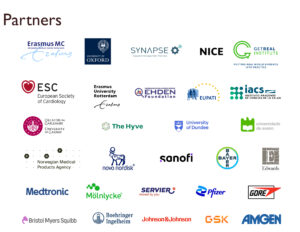
GREG is a large‑scale public–private partnership. It involves 29 organisations from 15 European countries. Together, the consortium brings together a wide range of stakeholders. These include academic research centres, regulatory authorities, HTA bodies, patient organisations, non‑profit organisations, SMEs, and industry partners. Through this diversity, GREG’s outputs are co‑created with those who generate, assess, and use real‑world evidence in practice. The project is coordinated by Erasmus University Medical Center (Erasmus MC). Meanwhile, industry leadership is provided by major life‑science companies. Together, partners share a commitment to advancing trustworthy and usable RWE in Europe.
Structure and role of the work packages
To deliver its objectives, GREG is organised into nine work packages (WPs). Each work package addresses a specific aspect of real‑world evidence generation, evaluation, or implementation. The work follows an iterative approach: First, activities include reviewing existing guidance. Next, the consortium analyses real regulatory and HTA use cases, including both successful and unsuccessful examples. In parallel, the project conducts pilot testing and maintains continuous stakeholder engagement. Consequently, guidance and tools can be refined over time based on experience and feedback.
At a high level, the work packages focus on:
- Reviewing existing RWE guidance and use cases to identify gaps and challenges
- Co‑creating practical guidance and tools for different product types and development stages
- Running pilot and demonstration studies to test feasibility and impact
- Supporting stakeholder engagement, training, and dissemination
This structure ensures that GREG’s outputs are scientifically robust. It also ensures they are practical, reusable, and relevant beyond the project’s lifetime.
The role of the EHDEN Foundation
Within this context, the EHDEN Foundation contributes extensive experience in large‑scale, federated real‑world data research. This experience was developed through the European Health Data & Evidence Network (EHDEN) project.
In practice, The Foundation brings expertise in observational study design and data harmonisation. It supports the use of the OMOP Common Data Model and the generation of high‑quality RWE across Europe. By doing so, EHDEN helps ensure that GREG’s outputs reflect real analytical practice. It also supports scalability, interoperability, and alignment with open‑science principles.